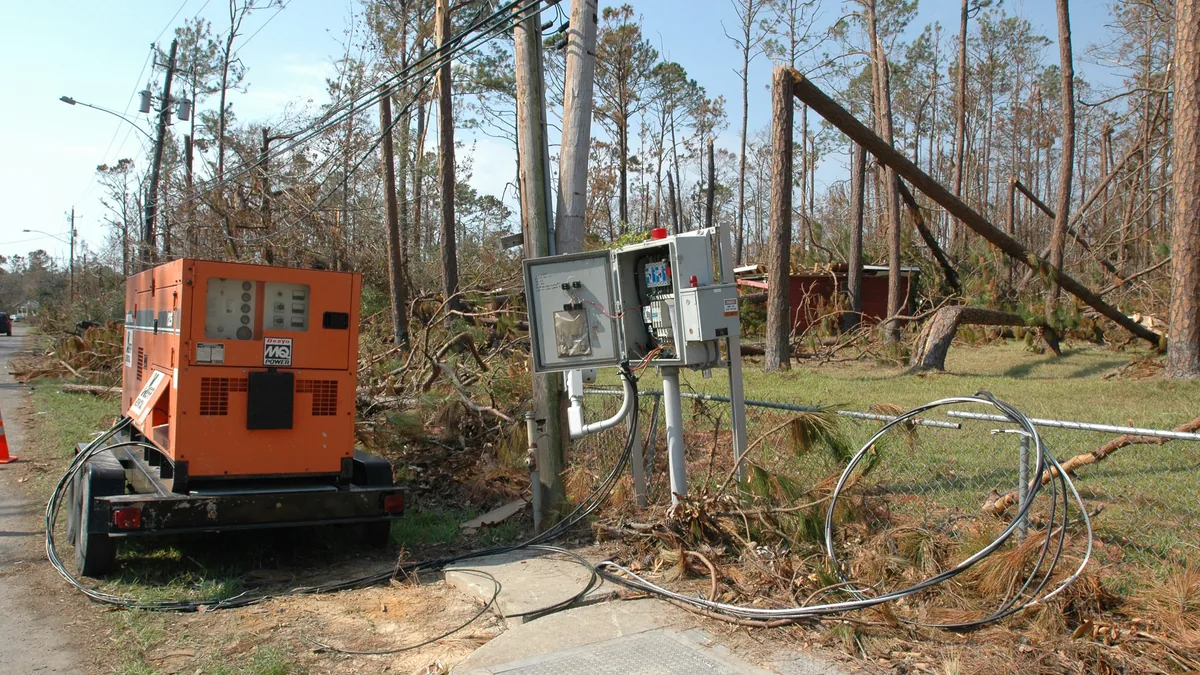
A portable generator can keep a refrigerator cold and, sometimes, keep drying equipment running after a Miami hurricane. It can also kill people in the same house if the exhaust comes inside. The Centers for Disease Control and Prevention says to run a portable generator outdoors, more than 20 feet from windows, doors and vents, and never in a garage. That rule does not change because it is raining, or because the generator is "just for an hour."
Carbon monoxide, in plain terms
Carbon monoxide is a colorless, odorless gas from incomplete combustion. It builds up in enclosed or partly enclosed spaces — a garage with the door cracked, a screened patio, a room next to an open window the exhaust is pointed toward. People can lose consciousness before they realize there is a problem.
Ready.gov, the federal preparedness site, repeats the same distance: keep generators outdoors and at least 20 feet from windows, doors and attached garages. It also says to put carbon monoxide detectors on every level of the home, keep the generator dry, use heavy-duty extension cords, and let the unit cool before you refuel it. A wet generator is an electrical hazard as well as a CO hazard. A canopy that traps exhaust is not a safe workaround. Place the unit on a dry, stable surface in an open area, and keep children and pets away from the frame and the cords.
If anyone in the house has a headache, dizziness, nausea or confusion while a generator is running, get them into fresh air and call emergency services. Do not assume it is "just stress after the storm."
What a generator can actually run
Runtime depends on the load and the tank, not on a marketing label. Honda's published wattage estimation guide lists example running watts such as about 132–192 watts for an Energy Star refrigerator, about 800 watts for a 1/3-horsepower sump pump, about 1,050 watts for a 1/2-horsepower sump, about 1,500 watts for a 10,000 BTU window air conditioner, and about 650 watts for a dehumidifier. Starting watts are higher than running watts, especially for pumps and compressors.
Add the running watts of everything you plan to plug in at once, then leave a margin. A dehumidifier plus a refrigerator plus a few lights can be realistic on a mid-size unit. A dehumidifier plus a window air conditioner plus a microwave is often not. The hurricane generator runtime tool walks through that arithmetic. It is a planning aid, not a guarantee that any particular unit will last a given number of hours. Check the label on your own generator; models differ.
Drying equipment after the storm
Wet drywall and a wet slab still need a real dry-out, as described on the structural drying page. If the power is out, a generator may run one dehumidifier or a small set of air movers, not a whole-house drying plan. Do not place the generator in the room you are trying to dry, and do not run it in the garage to "reach the equipment more easily." Exhaust and fuel stay outside; only the cords come in, and only if they are rated for the load and kept out of standing water.
If the load is more than the generator can support, wait for utility power or for a provider who can bring a safely sited, larger source. A half-dried room with a carbon monoxide risk is not a good trade. The same 24 to 48 hour drying window still applies once power is available; do not skip moisture readings just because the outage lasted several days.
For houses in Kendall and nearby unincorporated areas, where outages can last after a storm and many homes sit on a slab, see the Kendall area page. The hurricane prep checklist covers the wider water-damage steps to take before and after a storm.
This site is an independent referral service. If you send a request, one local provider may contact you about your home.
FAQs
Can I run a generator in the garage if the door is open?
No. The CDC says never to run a portable generator in a garage, and to keep it more than 20 feet from doors, windows and vents. An open garage door does not make the space safe.
How far from the house is far enough?
More than 20 feet from windows, doors and vents, outdoors, is the distance both the CDC and Ready.gov state. Point the exhaust away from the house.
Will a generator run all of the drying equipment?
Often not. A dehumidifier may be possible; a full set of air movers and dehumidifiers usually is not, unless the unit is large and the load is calculated. Use the runtime tool and the unit's rated watts, and do not overload it.
Do I still need carbon monoxide alarms if the generator is outside?
Yes. Ready.gov recommends detectors on every level. A shift in wind, or a door left open, can still bring exhaust toward the house.
Sources
- CDC, Carbon Monoxide (portable generators outdoors, more than 20 feet from windows, doors and vents; never in a garage).
- Ready.gov, Power Outages.
- Honda, Generator wattage estimation guide.