A wet concrete slab in Miami does not dry on the same clock as a wet floor in a dry climate. The air outside is often as humid as the air you are trying to dry, and the Biscayne Aquifer keeps a shallow water table under much of the county. The work is measured with meters, not with a guess or a two-day promise, and tile or vinyl over the slab can hide moisture long after the surface looks fine.
Why opening the windows usually fails here
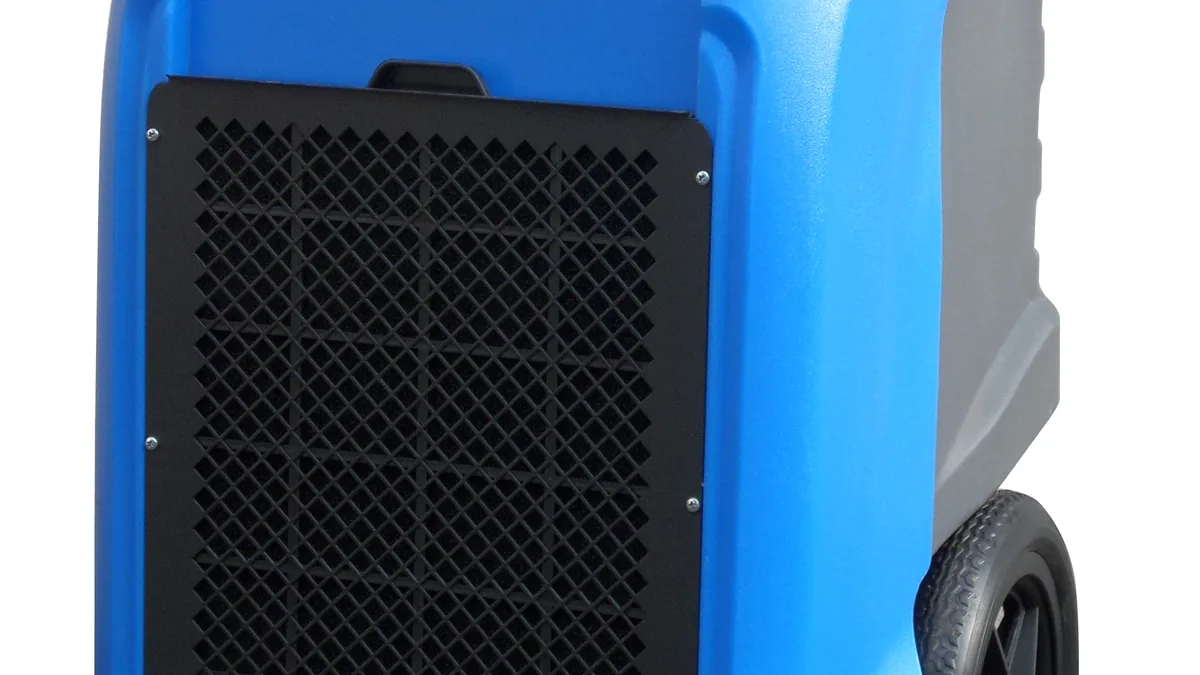
In a dry, cool place, outdoor air can help a wet room. In Miami-Dade, outdoor air is frequently already loaded with moisture. Opening sliders after a leak can add humidity to the room and slow the job, especially in summer. The usual approach is the opposite: close the space, run dehumidifiers that can actually wring water out of the air, and use air movers to keep that drier air across the wet surfaces.
A box fan aimed at a wet corner, with the doors open, is not the same as a controlled dry-out. It can evaporate a puddle and still leave the slab, the thinset and the base of the drywall wet.
The slab and the water table
The U.S. Geological Survey describes the Biscayne Aquifer as a highly permeable, unconfined limestone aquifer with a shallow water table, and as the principal drinking-water source for Miami-Dade. When the water table is close to the surface, a slab-on-grade house has little room underneath for water to drain away. Water from a supply-line break, an air-handler overflow or a wet appliance can move laterally through the slab and collect at low spots, under cabinets, and along walls.
That is one reason a "small" leak on tile can later show up as a musty baseboard on the other side of the room. The wet area is often larger than the stain.
Tile, thinset and the myth of a fixed timeline
Many houses and condos in the county have tile, stone or vinyl plank over the slab. Those finishes can look dry while the thinset and the concrete below are still holding water. A provider who only feels the tile with a hand, or who packs up when the air feels cooler, can leave a moisture problem in place.
A thorough dry-out typically includes:
- Moisture mapping of the slab, the grout lines and the lower walls, with readings written down each day.
- Removal of saturated pad, carpet or failed vinyl when those materials will not dry in place.
- Selective lifting of tile only where readings show it is trapping water, not as a default demolition.
- Dehumidification sized for the space, with the building closed as much as the job requires.
- A clear dry standard, so everyone knows when the equipment can come out.
IICRC S500 is the professional standard that restoration companies use to classify the water and the amount of wetting. It does not publish a single number of days that fits every Miami slab. Anyone who promises a finished slab in a set number of hours, without readings, is guessing.
How long is too long
The EPA advises drying water-damaged materials within 24 to 48 hours to help prevent mold growth. That is the window to start a real dry-out, not the time in which a slab will necessarily reach a dry standard. A slab can take longer, especially under tile. What you do not want is two quiet days of wet thinset with no equipment and no readings.
The water removal cost estimator uses this site's pricing rates to turn a wet area into a planning range. A clean, contained leak on a slab often starts in the Typical band of $1,500–$5,000 once walls and flooring are involved; a one-area overflow found immediately may still fall in the $450–$1,500 Small band. Those are planning figures, not a bid.
For the order of extraction, equipment and monitoring, see structural drying. For slab-on-grade houses in Kendall and nearby unincorporated Miami-Dade, the Kendall area page covers local housing. An earlier post, AC drain line overflow, describes one of the leaks that often wets a closet slab.
This site is an independent referral service. If you send a request, one local provider may contact you about your home.
FAQs
Why is my floor still cold or dark after the puddle is gone?
The surface can dry while the slab or the thinset is still wet. Ask for moisture readings in several places, including under the edge of tile or cabinets if the provider can take them without unnecessary damage.
Should I run the air conditioner while the slab is drying?
The air conditioner removes some moisture, but it is not a substitute for dehumidifiers set up for a water loss. Ask the provider how they want the system used so you do not work against the drying plan. If the leak started at the air handler, the unit itself may need to stay off until it is safe.
Can tile always be saved?
Not always. If readings show moisture trapped under the finish, or if the tile has lost its bond, some of it may have to come up. That decision should follow measurements, not a habit of tearing out every floor.
Is there a standard number of days for drying a Miami slab?
No single published number fits every house. Humidity, the depth of wetting, the floor finish and the equipment all change the clock. Daily readings are how you know the job is actually moving.
Sources
- USGS, Biscayne Aquifer, HA 730-G.
- IICRC, ANSI/IICRC S500.
- EPA, A Brief Guide to Mold, Moisture and Your Home.