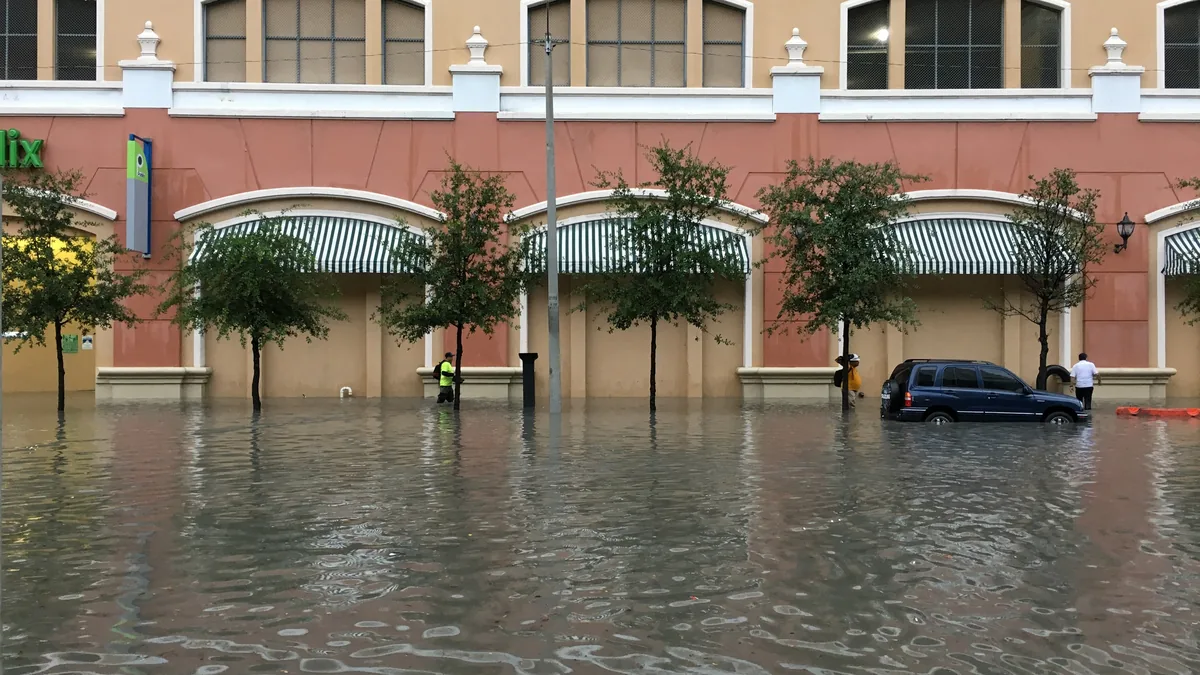
Miami-Dade County sits on the Biscayne Aquifer, a highly permeable, unconfined limestone aquifer with a shallow water table. That geology is why streets and yards can fill from below during heavy rain or a high tide, even when a canal has not obviously overtopped. For a homeowner, the practical point is simple: water that rises through the ground is still flood water, and it is not clean.
What the aquifer is
The U.S. Geological Survey, in Hydrologic Atlas 730-G, describes the Biscayne Aquifer as the principal drinking-water source for Miami-Dade and as a limestone system that water moves through easily. "Unconfined" means there is not a tight cap of clay holding the water down. When the water table is already close to the surface, a few more inches of rain, or a high tide pushing into the porous rock, can bring that water up into yards, swales and low floors.
This is also why a pump at the street can struggle. If the ground itself is saturated, water comes up around the pavement as fast as a drain can take it away.
What cities here already say about it
Hialeah's own flood page paints the picture plainly: level, low ground laced with canals and lakes, and groundwater sitting only a short way down. It warns that canals can spill over their banks and names the 1999 and 2000 storms as the city's widespread-flooding benchmarks.
Coral Gables, to the south, describes the same exposure in its own words: heavy rain and surge are its main flood threats, water borders the city on several sides (the bay, the Miami River, lakes and canals), the land is close to sea level, and the aquifer lies just beneath it.
Those are official descriptions of the same regional geology, written for two different municipalities. They are not a prediction that any one lot will flood in the next storm. They are a reason to know your floor elevation, your flood zone and whether a flood policy is already active on your home.
What "flooding from below" looks like at a house
- Water appearing in a low yard or patio with no obvious flow from the street.
- Seepage along a slab edge, a garage seam or a ground-floor closet after long rain.
- Drains that stand full, or that burp water backward, because the ground and the outfall are already high.
- A waterline that is fairly even around the lowest part of the house, rather than a stain under a single ceiling leak.
That pattern is different from a supply-line break, which usually has a clear indoor source, and different from rain through a failed roof. The flood vs. wind damage sorter is built around that distinction. A later post, king tides in Miami, covers the tidal side of the same high-water problem. If the water table is already high, a king tide does not have to overtop a seawall to make a ground-floor room wet.
What it means for cleanup
Water that has been in the street, a canal, a yard or the limestone counts as Category 3 under IICRC S500, the professional water-damage standard, since it may carry contaminants. A shallow, clear-looking puddle on a patio that then ran under a door is still outdoor water. Carpet, pad, insulation and much of the lower drywall that soaked it up often have to come out. The slab and hard surfaces can often be cleaned, but only after extraction and measured drying.
A standard homeowners policy generally does not cover flood. If this is how water entered, the claim usually belongs on a flood policy, not on the wind portion of a homeowners policy. Check with your insurer rather than guessing in the first hour. Then photograph the waterline, inside and out, before anyone scrubs it away.
For the cleanup sequence after storm or ground water, see storm and flood cleanup. Hialeah's canal and groundwater notes are collected on the Hialeah area page.
This site is an independent referral service. If you send a request, one local provider may contact you about your home.
FAQs
Does a shallow water table mean my house will flood?
No. It means the ground has less capacity to absorb more water, so low lots and low floors are more exposed when rain or tide is already high. Your elevation, drainage and flood zone still matter. Check your parcel rather than assuming the worst or the best.
Is water that seeps up through a slab clean?
Treat it as contaminated outdoor water until a qualified person says otherwise. Appearance is a poor test.
Will my homeowners policy pay if the yard comes in under the door?
Usually not, because that is flood. A separate flood policy is the usual place that loss belongs. Ask your agent what you have in force.
Why do canals matter if the water is coming from the ground?
Canals are part of the same drainage system. When they are already high, they cannot take more water from the neighborhood, and they can add water when they overtop. Hialeah's flood page makes that point directly.
Sources
- USGS, Biscayne Aquifer, HA 730-G.
- City of Hialeah, Local Flood Hazard.
- City of Coral Gables, Flood Protection and Insurance.
- IICRC, ANSI/IICRC S500.